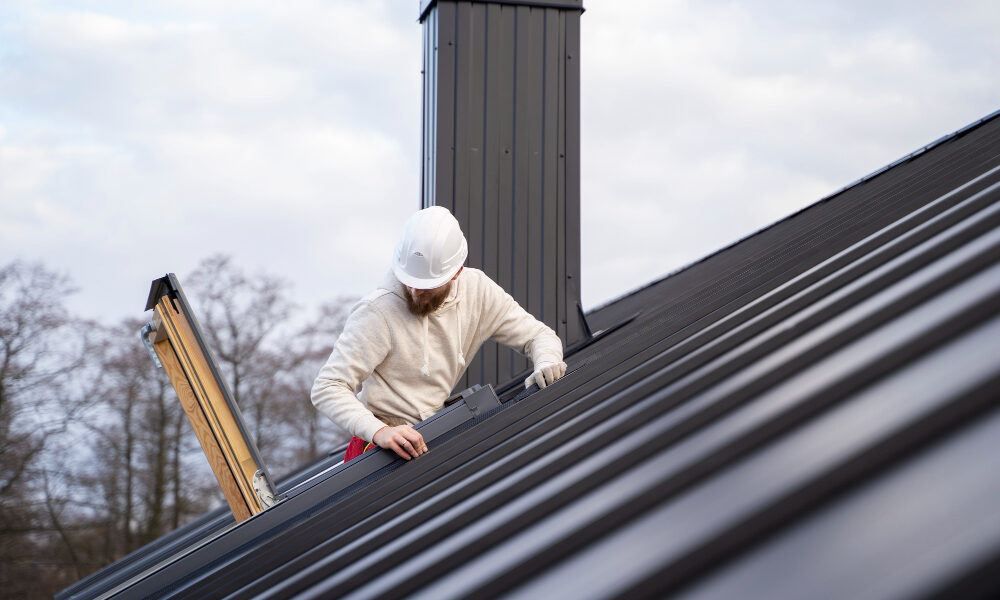
Commercial Roofing Folsom: Where Performance Meets Refined Craftsmanship
In Folsom, where commercial properties range from professional offices and retail spaces to multifamily and other business facilities, a roof must respond to more than appearance. Sacramento-area summer heat, seasonal rain, rooftop mechanical equipment, penetrations, drainage patterns, and the architecture of the building itself all influence how a roofing system should be evaluated and maintained. *The most refined solution is not necessarily the most elaborate one; it is the one that feels entirely appropriate for the building it protects.*
The Architecture Above the Everyday
A commercial roof exists at an intriguing intersection of architecture and engineering. From street level, it may disappear behind parapets and carefully designed elevations. From above, however, an entirely different landscape emerges: membranes or other roofing materials stretching between drains, mechanical units rising from curbs, vents and pipes penetrating the surface, and transitions bringing separate parts of the building together. Each element creates a relationship that must be considered as part of the complete roofing assembly.
This is why commercial roofing should never be reduced to a simple question of covering square footage. The roof has to work with the structure beneath it and with the activity taking place inside. A professional office building may prioritize predictable scheduling and minimal disturbance to occupants. A retail property may require careful coordination around customers and deliveries. Other commercial facilities may have extensive rooftop equipment that makes access and detailing especially important.
Roof slope also shapes the conversation. Many commercial buildings use low-slope configurations in which water management depends on deliberate drainage paths rather than the dramatic pitch commonly associated with residential roofs. Drains, scuppers, gutters where applicable, and the surrounding roof geometry become part of a carefully connected system.
*When these elements work together, the roof recedes elegantly into the background. When they do not, even a small weakness can become impossible to ignore.*
“True roofing craftsmanship is often found in the details no one notices when everything is working exactly as it should.”
Craftsmanship Lives in the Details
Large expanses of roofing material naturally command attention during installation, yet some of the most consequential workmanship occurs at comparatively small locations. Roof edges, seams, flashing, penetrations, drains, curbs, transitions, and connections around rooftop equipment require careful execution because these are the places where separate materials and building components meet.
Consider an HVAC unit positioned on a commercial roof. The equipment itself may be substantial, but from a roofing perspective, the transition around its curb deserves particular attention. Pipes, vents, conduits, skylights, and other penetrations introduce similar conditions. A roof can appear expansive and uncomplicated from a distance while containing numerous details that each contribute to overall performance.
Drainage carries the same importance. Water should have a deliberate route away from the roof. Conditions that interfere with that movement deserve attention because prolonged water accumulation can place additional demands on roofing materials and vulnerable details. The sophistication of a well-designed commercial roof therefore comes not from visual ornamentation but from *precision, compatibility, and control*.
This is where the character of professional Commercial Roofing Folsom becomes apparent. Quality is expressed through preparation before the visible work begins, through attention to transitions during installation, and through a finished system that respects the architecture rather than simply covering it.
There is a certain elegance in restraint. Flashing should perform without appearing improvised. Penetrations should feel integrated rather than treated as afterthoughts. Drainage should be intentional. Materials should suit the roof configuration and proposed scope. The finished work should communicate order—even in areas most people will never see.
Choosing a Roofing System With the Building in Mind
There is no universal commercial roofing material that deserves to be called the finest choice for every Folsom property. Buildings differ too greatly in roof configuration, existing conditions, drainage, mechanical equipment, occupancy, budget, and long-term ownership plans. A sophisticated roofing decision begins by understanding those differences rather than selecting a material in isolation.
Low-slope commercial properties may use membrane roofing systems or other solutions suited to their configuration, while certain buildings may incorporate metal or different roofing assemblies. Existing construction also matters. A replacement project begins with conditions that already exist, and those conditions can influence preparation, detailing, material selection, and the overall scope of work.
For this reason, the evaluation should begin before product selection. What is the condition of the existing roof? Where have previous repairs occurred? How does water leave the surface? Which penetrations and rooftop systems require coordination? Are there recurring trouble areas? How will roofing work interact with normal business activity?
Experienced commercial roofing professionals should be able to connect these observations to a clear recommendation. Rather than presenting materials as isolated products, the conversation should explain how the proposed system responds to the building itself.
*The most premium choice is not automatically the most expensive specification. It is the solution whose materials, detailing, installation, and future maintenance make sense together.*
That distinction is especially valuable when comparing proposals. Two contractors may appear to be bidding on the same roof while describing substantially different scopes. Preparation, flashing, drainage details, penetrations, edge conditions, rooftop equipment, cleanup, and documentation can all influence what the property owner is actually purchasing. An elegant proposal, much like an elegant roof, should possess clarity.
A Roof Designed for Years, Not Just Installation Day
The moment a roofing project is completed is important, but it should not be the only moment considered during planning. Commercial properties evolve. Mechanical equipment is replaced. Contractors access rooftops. Weather passes season after season. Drainage areas collect debris. Materials age, and details that were once pristine can eventually require maintenance.
A long-term approach therefore treats installation as the beginning of the roof’s managed life rather than the end of the project. Records of inspections, repairs, materials, photographs, and significant rooftop work create a history that can become increasingly useful over time. Instead of approaching every future issue as an isolated event, property managers can compare new observations with documented conditions.
Periodic professional evaluation can also reveal subtle changes before they become interior disruptions. This does not mean every observation requires major work. In fact, one of the benefits of thoughtful maintenance is the ability to distinguish ordinary upkeep from conditions that deserve more immediate attention.
For owners responsible for valuable commercial real estate, this perspective can be particularly meaningful. A roof protects far more than structural components. Beneath it may be finished interiors, technology, equipment, merchandise, tenant improvements, employees, customers, and the daily rhythm of a functioning business.
“The value of a commercial roof is ultimately expressed in what it allows the building beneath it to do—quietly, comfortably, and without interruption.”
The Quiet Standard of a Well-Protected Property
Exceptional commercial roofing does not need to announce itself. There is no dramatic reveal each morning when employees arrive or customers walk through the doors. Instead, its presence is felt indirectly: interiors remain protected, drainage behaves as intended, vulnerable transitions are thoughtfully detailed, and the roof becomes a dependable part of the building rather than a recurring source of uncertainty.
That understated performance is particularly fitting for a well-managed Folsom commercial property. Owners invest considerable thought into architecture, interiors, mechanical systems, tenant experience, landscaping, and long-term property value. The roofing system deserves the same level of consideration precisely because it protects all of them.
When evaluating Commercial Roofing Folsom, look beyond the broad surface. Consider the details around penetrations, edges, flashing, drainage, and rooftop equipment. Consider how the proposed materials relate to the building and how the work will be coordinated around its occupants. Most importantly, consider how today’s roofing decision will be maintained and understood years after installation.
*True quality often reveals itself through consistency rather than excess.* A commercial roof designed, installed, repaired, and maintained with that philosophy can become one of the building’s quietest achievements—rarely demanding attention, yet always performing an essential role above everything the property was created to contain.